- Capacity
- 128Kbit
- Technology
- EEPROM
- Interface
- I2C
- Supply voltage
- 1.8V ~ 3.6V
- Package
- 8-SOIC (0.209", 5.30mm Width)
- Operating temperature
- -40°C ~ 85°C (TA)
- Clock frequency
- 400 kHz (2.5–3.6 V); 100 kHz (1.8–2.5 V)
- Organization
- 16K x 8
- Catalog lifecycle
- Obsolete (catalog)
Procurement requirements
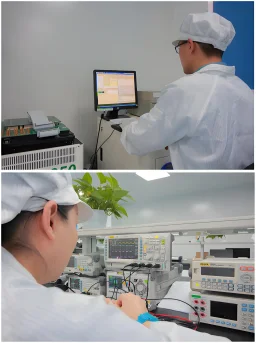
The catalog status is Obsolete (catalog). For AT24C128W-10SI-1.8, confirm current lifecycle and exact order-code availability. For legacy sourcing, agree lot traceability, storage/packing checks and an inspection scope; this does not establish current factory production.
RFQ brief
Related ordering variants
AT24C128-10PI-1.8
Package: AT24C128W-10SI-1.8 = 8-SOIC (0.209", 5.30mm Width); AT24C128-10PI-1.8 = 8-DIP (0.300", 7.62mm). These are catalog differences between ordering variants, not a declaration of board-level interchangeability.
Product-specific questions
Which capacity and ordering conditions identify this device?
AT24C128W-10SI-1.8 is a 128 Kbit serial EEPROM: 16384 addressable bytes, organized as 16K x 8. This order selects 8-SOIC (0.209", 5.30mm Width), 1.8–3.6 V and -40°C–85°C. Kbit denotes bits, not kilobytes. The family document contains several supply and package options; their headline limits cannot all be applied to this code.
Atmel AT24C128 — 0670E; identity and complete ordering entry · 1, 13
How must a 64-byte page write be split?
The page-write buffer holds 64 bytes. Only the lower 6 address bits increment inside the write transaction. Crossing that boundary wraps to the beginning of the same page and can overwrite earlier bytes; it does not continue into the next page. Limit a transfer to 64 − (start address mod 64) bytes, issue STOP, and wait for write completion before the next transfer.
Atmel AT24C128 — 0670E; byte/page write and completion polling · 9
Does the serial clock rating describe EEPROM programming time?
Rev.0670E lists 5 ms as typical, while its AC table lists tWR maxima 20 ms at 1.8 V and 10 ms at 2.5 V/5 V. A typical figure is not the timeout limit. Bus clock and nonvolatile programming are separate timings. STOP starts the internal write; the device does not acknowledge while busy. Use the documented acknowledge-polling sequence and the applicable maximum instead of treating a fast bus transfer as a completed write.
Atmel AT24C128 — 0670E; byte/page write and completion polling · 9
Atmel AT24C128 — 0670E; AC characteristics and supply conditions · 5
Which voltage-dependent clock limit applies?
The applicable family columns specify 100 kHz at 1.8 V and 400 kHz at 2.5/2.7 V. The 1 MHz-at 5 V column is outside this 1.8–3.6 V option. AT24C128W-10SI-1.8 has the selected supply range 1.8–3.6 V. Use the AC column and loading/edge conditions appropriate to the actual board supply.
Atmel AT24C128 — 0670E; AC characteristics and supply conditions · 5
What does driving WP high actually protect?
For AT24C128 in 0670E, WP tied to VCC protects the entire array. WP at GND permits normal write operations. This scope is device-specific; neither the same capacity nor adding/removing an A suffix establishes identical write protection. Check the protection table before changing a configuration-memory BOM.
Atmel AT24C128 — 0670E; pin functions and protection table · 1, 2, 3
What belongs in the order-specific RFQ?
Specify AT24C128W-10SI-1.8, 8-SOIC (0.209", 5.30mm Width), 1.8–3.6 V, -40°C–85°C, quantity and delivery date/destination. For programmed EEPROM, include the image revision, address map, checksum and required protection state; otherwise request blank material. Identify carrier packaging, date/lot information and agreed inspection documents. Keep inventory, price, MOQ and dispatch timing in the live quotation system.
Atmel AT24C128 — 0670E; identity and complete ordering entry · 1, 13