- Capacity
- 64Kbit
- Technology
- EEPROM
- Interface
- Parallel
- Supply voltage
- 4.5V ~ 5.5V
- Package
- 28-SOIC (0.295", 7.50mm Width)
- Operating temperature
- -40°C ~ 85°C (TC)
- Organization
- 8K x 8
- Catalog lifecycle
- Obsolete (catalog)
- Write granularity
- Single byte
- Write-cycle time: word / page
- 1 ms max.
Procurement requirements
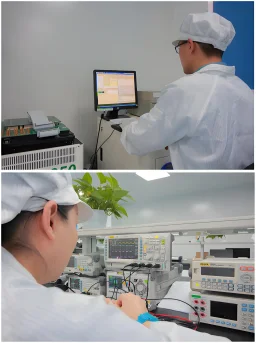
The catalog status is Obsolete (catalog). For AT28C64-25SI, confirm current lifecycle and exact order-code availability. For legacy sourcing, agree lot traceability, storage/packing checks and an inspection scope; this does not establish current factory production.
RFQ brief
Related ordering variants
AT28C64-12JI
Package: AT28C64-25SI = 28-SOIC (0.295", 7.50mm Width); AT28C64-12JI = 32-LCC (J-Lead). These are catalog differences between ordering variants, not a declaration of board-level interchangeability.
Product-specific questions
What do 25 and SI specify for this order code?
AT28C64-25SI selects 250 ns address-to-output read access, 28S (28-lead 0.300-inch SOIC), and the -40°C–85°C operating range. The ordering table distinguishes commercial and industrial entries. The listed 64 Kbit capacity is an 8K x 8 byte-wide array, not 64K bytes.
Atmel AT28C64 — Ordering Information / Options · 9
Does this standard AT28C64 have the 200 µs write time of AT28C64E?
No. The ordering options distinguish the blank standard option: 10K write cycles and a 1 ms byte-write time, from the E high-endurance option: 100K cycles and 200 µs. A headline listing both times is not evidence that a standard AT28C64 code has the E-option specification.
Atmel AT28C64 — Ordering Information / Options · 9
Does a 250 ns read rating also describe a complete EEPROM write?
No. 250 ns is tACC for read access; this bin also lists tOE from 10 ns to 100 ns. A byte write is self-timed internally and uses the separately specified 1 ms standard-option write cycle. During that write, attempted reads behave as completion polling rather than ordinary stored-data reads.
Atmel AT28C64/AT28C64X — AC Read Characteristics · 5
How does the host detect that a byte write has finished?
The AT28C64 provides an open-drain RDY/BUSY output, driven low during a write and released at completion. DATA Polling is also available: I/O7 returns the complement of the written data during the cycle; after completion the true data appears. The other output bits are indeterminate during polling and must not be used as valid stored data.
Atmel AT28C64/AT28C64X — Device Operation · 3
Can an AT28C64X substitution retain the same READY/BUSY connection?
The cited document says RDY/BUSY is not connected on AT28C64X. A host that waits for the standard AT28C64 hardware busy output therefore needs a reviewed completion-detection approach for an X variant. Shared capacity and a similar package do not establish identical control-pin behavior.
Atmel AT28C64/AT28C64X — Device Operation · 3
Does ordinary byte writing require the 12 V chip-clear operation?
No. Ordinary byte write uses the normal 5 V ±10% supply and the CE/WE/OE write-control sequence. CHIP CLEAR is a different operation that clears the whole memory and uses the separately documented high-voltage OE sequence. Device identification also has a separate high-voltage A9 selection procedure; neither should be confused with routine byte writing.
Atmel AT28C64/AT28C64X — Device Operation · 3
What should be specified when sourcing the 28S variant?
Request AT28C64-25SI, 250 ns, 28-lead 0.300-inch SOIC, -40°C–85°C, the standard 1 ms/10K-cycle option, and the required quantity/date/destination. Identify any required programmed image and checksum, carrier packaging, date/lot identification and inspection documents. Do not silently accept E or X as equivalent ordering codes.
Atmel AT28C64 — Ordering Information / Options · 9