

1. Physical Comparison at a Glance
| UDIMM (Unbuffered DIMM) | SO-DIMM (Small Outline DIMM) | |
|---|---|---|
| Pin Count | 288-pin | 260-pin |
| Physical Size | 133.35mm × 31.25mm | 67.6mm × 30mm |
| Typical Slot | Desktop motherboard, 1U/2U server, industrial ATX | Laptop, embedded SBC, industrial mini-ITX, network appliance |
| Key Notch | Single notch (center-right) | Single notch (center-left, closer to edge) |
| Max Capacity (DDR4) | 32GB per module (non-ECC) | 32GB per module (non-ECC) |
| ECC Support | UDIMM ECC available | SO-DIMM ECC available (rare) |
Important: UDIMM and SO-DIMM are physically incompatible. You cannot install a SO-DIMM module in a DIMM slot (or vice versa), regardless of speed or capacity. Check the motherboard manual or physically measure the slot if unsure.
2. When to Use UDIMM
UDIMM is the standard module for systems with full-sized memory slots:
- Desktop-class industrial PCs (Advantech, IEI, Axiomtek)
- 1U/2U short-depth servers
- Digital signage players with ATX/mATX motherboards
- Test equipment and measurement instruments (Keysight, Tektronix)
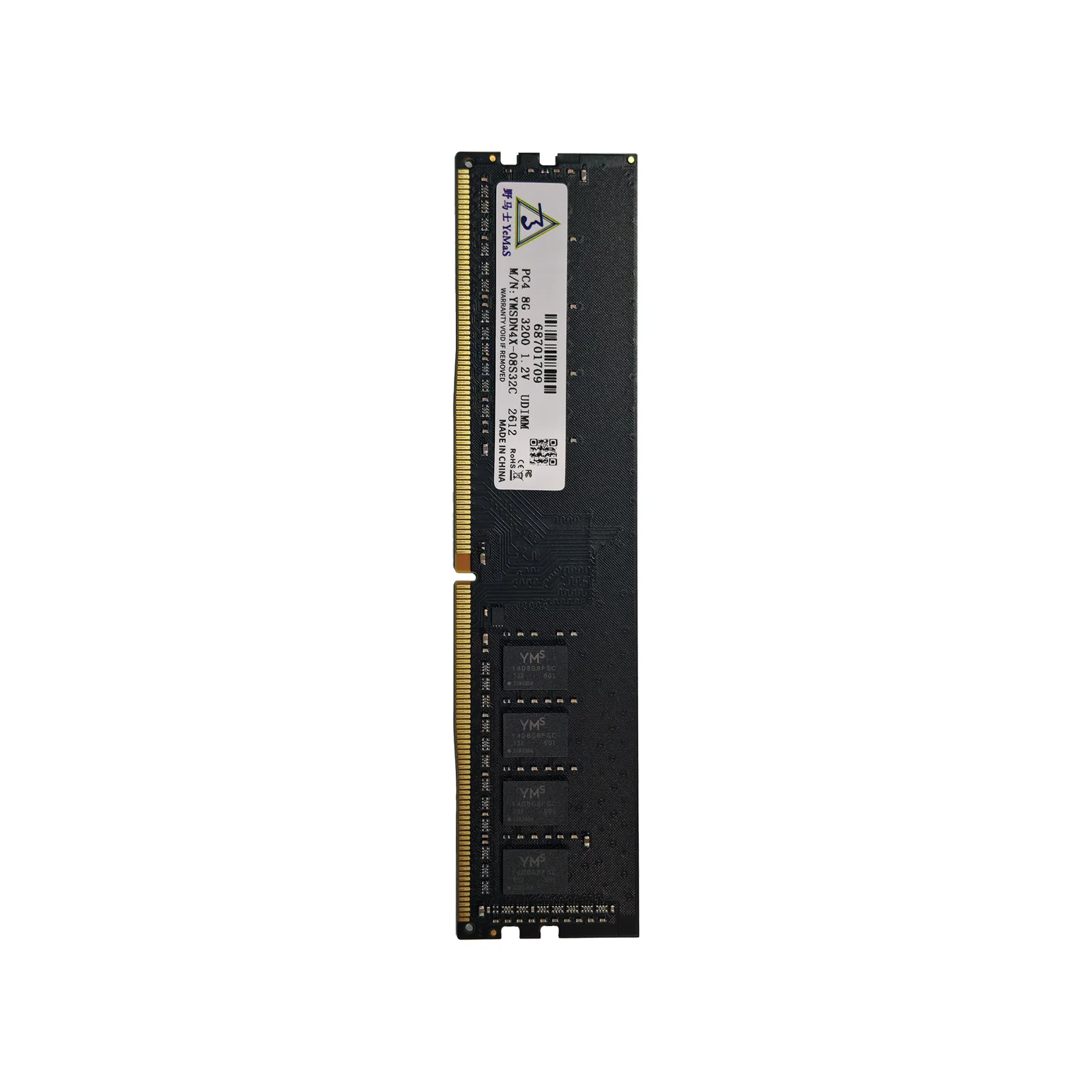
YEMAS UDIMM Product Line
| Capacity | Speed | Ranks | IC Config | YEMAS PN |
|---|---|---|---|---|
| 8GB | DDR4-2666 | 1Rx8 | 8x 8Gb | YMSDN4X-08S26C |
| 8GB | DDR4-3200 | 1Rx8 | 8x 8Gb | YMSDN4X-08S32C |
| 16GB | DDR4-2666 | 2Rx8 | 16x 8Gb | YMSDN4X-16S26C |
| 16GB | DDR4-3200 | 2Rx8 | 16x 8Gb | YMSDN4X-16S32C |
3. When to Use SO-DIMM
SO-DIMM is the compact form factor used in space-constrained systems:
- Embedded single-board computers (Raspberry Pi CM4 carrier boards, Jetson carrier boards)
- Industrial mini-ITX motherboards (fits behind a panel/display)
- Network appliances (firewalls, routers, VPN gateways)
- Thin clients and POS terminals
- Legacy laptops used in industrial environments
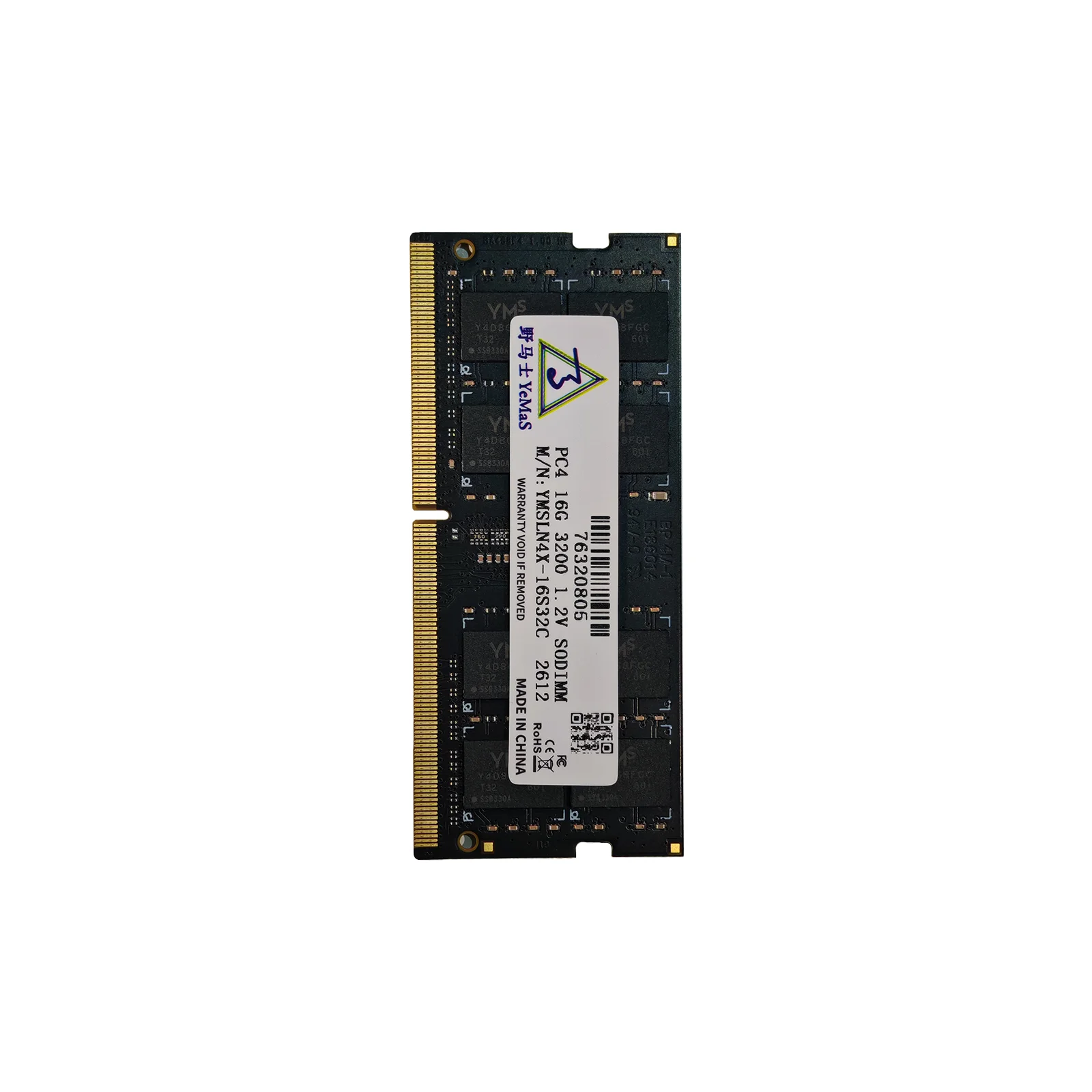
YEMAS SO-DIMM Product Line
| Capacity | Speed | Ranks | IC Config | YEMAS PN |
|---|---|---|---|---|
| 8GB | DDR4-2666 | 1Rx8 | 8x 8Gb | YMSLN4X-08S26C |
| 8GB | DDR4-3200 | 1Rx8 | 8x 8Gb | YMSLN4X-08S32C |
| 16GB | DDR4-2666 | 2Rx8 | 16x 8Gb | YMSLN4X-16S26C |
| 16GB | DDR4-3200 | 2Rx8 | 16x 8Gb | YMSLN4X-16S32C |
4. Speed Grade
| DDR4 Speed | Module Bandwidth | Common Label |
|---|---|---|
| DDR4-2666 | PC4-21300 | 2666 MT/s |
| DDR4-3200 | PC4-25600 | 3200 MT/s |
DDR4 modules are backward compatible — a DDR4-3200 module will work in a DDR4-2666 slot (at the lower speed). However, some industrial BIOS/UEFI implementations are picky — if the SPD doesn't contain the exact JEDEC profile the board expects, it may not POST.
5. 1Rx8 vs 2Rx8 — Why Ranks Matter
- 1Rx8 (single rank): 8 DRAM chips on one side. Lower power, slightly better compatibility with older chipsets.
- 2Rx8 (dual rank): 16 DRAM chips (8 per side). Higher capacity, slightly better performance due to rank interleaving.
Most modern chipsets handle both, but some embedded SoCs (e.g., Intel Atom E3900) have a limit of 2 ranks per channel. Adding a 2Rx8 module to both channels can cause a no-boot scenario.
6. ECC vs Non-ECC — Don't Guess
| Type | Error Correction | Use Case |
|---|---|---|
| Non-ECC UDIMM | No | Consumer / standard industrial |
| ECC UDIMM | Yes (single-bit error correction, double-bit detection) | Server, mission-critical, medical |
| ECC SO-DIMM | Yes | Industrial embedded (rare, more expensive) |
ECC modules are NOT interchangeable with non-ECC. ECC DIMMs have an extra DRAM chip (9 chips per rank instead of 8). If your board doesn't support ECC, the module won't work. If your board requires ECC, a non-ECC module will fail POST.
7. Real-World Scenario: Upgrading Memory in a Legacy Kiosk
A common request: "I need 8GB DDR4 for our [Brand X] kiosk controller, model Y."
- Identify the form factor: Open the unit. Long slot = DIMM. Short slot = SO-DIMM.
- Check the existing module label: Note speed (e.g., PC4-21300 = DDR4-2666), rank (1Rx8 or 2Rx8), and voltage (DDR4 is always 1.2V).
- Check ECC requirement: If the existing module has 9 chips per side, it's ECC.
- Order the matching spec: For kiosk/signage applications, 8GB DDR4-2666 or 3200 SO-DIMM 1Rx8 is the most common configuration.
8. YEMAS DDR4 Modules — Built for Industrial Lifecycles
YEMAS is IClee's own brand of DDR4 memory modules, assembled with commercial-grade DRAM ICs from manufacturer-authorized channels and tested on industrial motherboards before shipping. Every batch is qualified on at least two different chipset platforms to ensure compatibility across the industrial embedded ecosystem.
Why industrial buyers choose YEMAS:
- Real lead times: 3-4 weeks for custom configuration; stocked SKUs ship within 3 business days from Hong Kong.
- Honest specs: IC configuration (1Rx8 / 2Rx8) and speed grade published upfront — no hidden binning.
- Lifecycle stability: Same IC revision within a batch so you don't get surreptitious die shrinks mid-contract.
- Full product line: 8 SKUs spanning UDIMM and SO-DIMM, 8GB/16GB, DDR4-2666 and DDR4-3200.
All shipments include QC test reports upon request. Running a legacy system and can't find the right module? We do custom memory configuration.
DDR4 memory module on your BOM?
YEMAS UDIMM & SO-DIMM · 8GB / 16GB · 2666 / 3200 · HK stock · 3-4w lead time
WhatsApp Submit RFQ